INDUSTRY:
Handcraft Leather Goods
CLIENT:
Pegai
TYPE OF WORK:
Spec Project
COPY TYPE
About Page, Product Copy, Welcome Email
Pegai
CASE STUDY — PEGAI
The Market Problem
The leather goods market is dominated by brands that sell status first, substance second.
High prices are justified through:
storytelling detached from materials
heritage claims without proof
marketing language that promises longevity but delivers disposability
For buyers who understand leather, this creates friction: They aren’t confused — they’re disappointed.
Strategic Insight
Pegai’s customer doesn’t want to feel impressed. They want to feel certain.
They understand that:
real leather ages
wear is not damage — it’s evidence
value is revealed through use, not unboxing
The opportunity wasn’t to criticize luxury brands — it was to remove the need for belief entirely. Let the product do the talking.
Positioning Strategy
Pegai was positioned as a brand built on verifiable quality, not symbolic luxury.
The copy avoids:
exaggerated promises
emotional manipulation
aspirational fantasy
Instead, it focuses on:
materials
construction
time as the ultimate validator
This creates control — for both the brand and the buyer.
Core Emotional Driver
Control through quality.
The copy reinforces the idea that a Pegai product:
doesn’t need defending
doesn’t rely on reputation
improves through ownership
Every scratch becomes a record. Every year adds weight.
Execution Logic
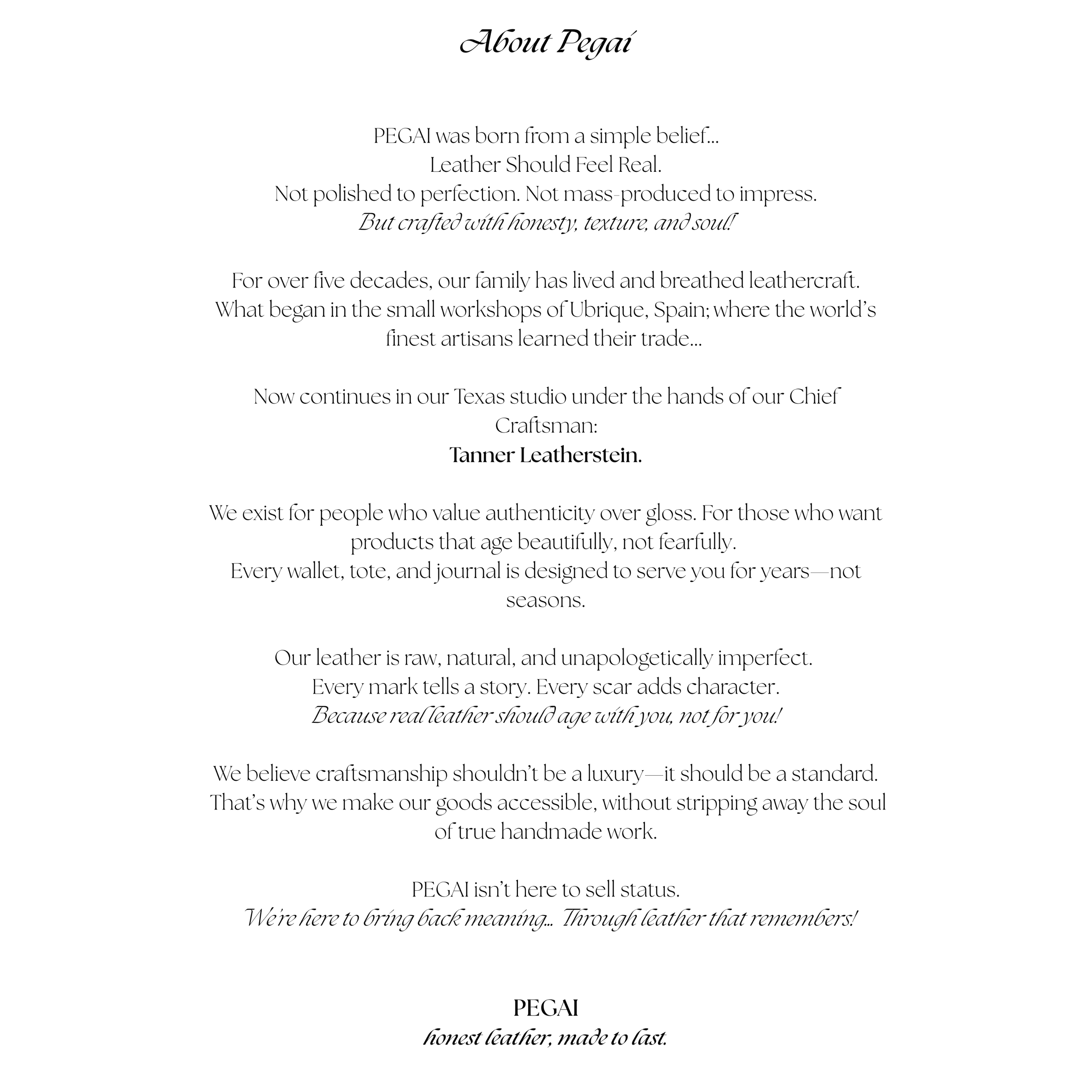
About Page:
Framed Pegai around craftsmanship and material honesty rather than founder fame or brand mythology. The copy establishes trust by narrowing claims instead of expanding them.
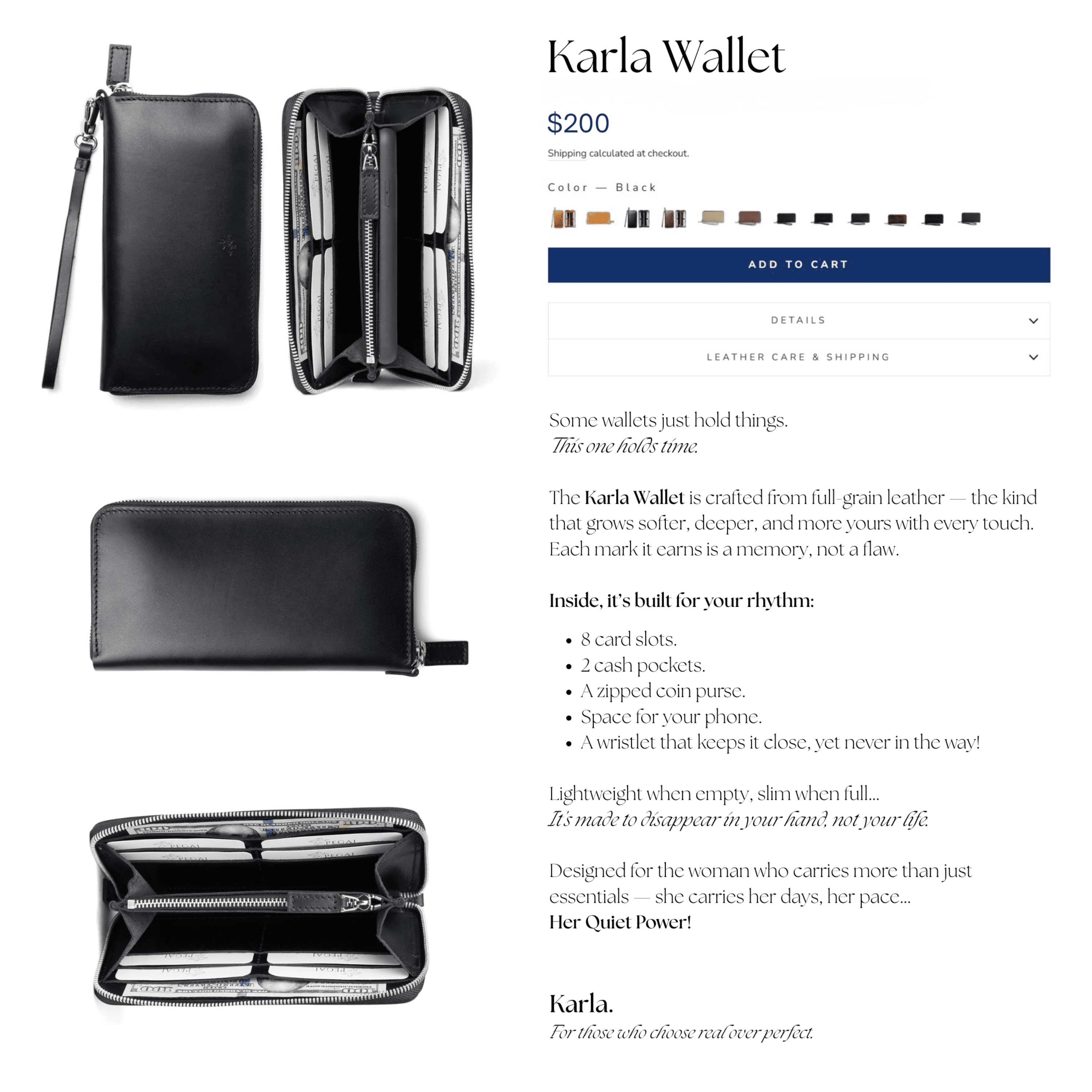
Product Copy:
Written to emphasize substance over sensation. Descriptions focus on leather grade, construction choices, and real-world use — allowing the buyer to assess value without persuasion.
Welcome Email:
Used to set expectations immediately. Rather than selling excitement, the email reinforces patience, ownership, and long-term perspective — aligning with the brand’s value system.
Outcome
This project positioned Pegai as a proof-based brand in a market built on promise. Rather than competing on image, the copy shifts the decision framework:
from aspiration to assessment
from brand recognition to material confidence
The result is a brand voice that feels grounded, restrained, and durable — mirroring the product itself.
What This Demonstrates
This case study reflects my approach to product-led copywriting:
I don’t amplify claims.
I reduce them — until only what’s defensible remains.
Because the strongest brands don’t persuade. They withstand scrutiny.